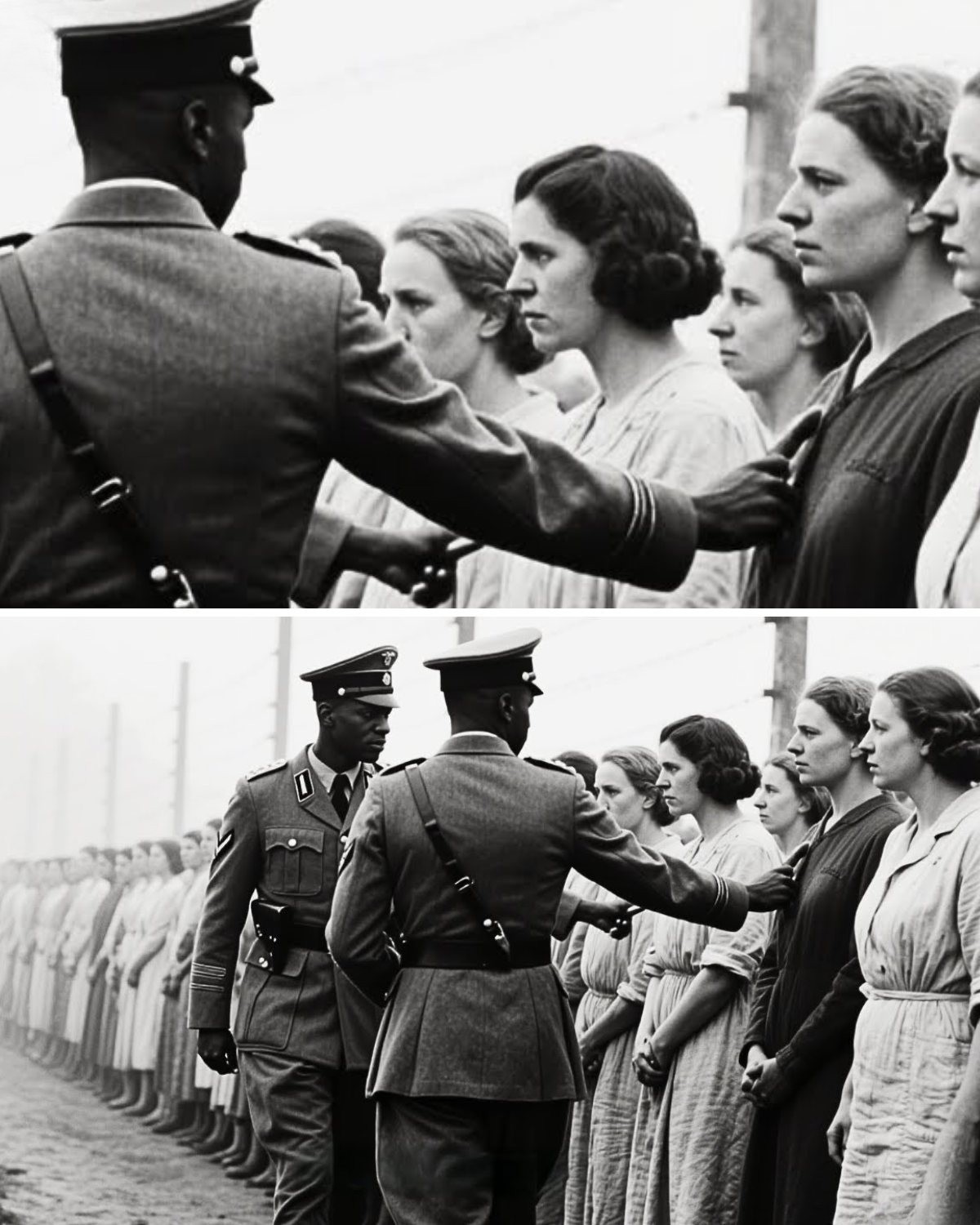
When German women held as prisoners of war encountered Black American soldiers for the first time in the United States, the moment carried a significance that extended far beyond a single camp or a single group of individuals. It became a quiet but powerful confrontation between ideology and reality, shaped by war, propaganda, and human interaction.
After the Allied advance through Europe during the final stages of World War II, thousands of German military personnel and civilian auxiliaries were transported overseas as prisoners of war. Among them were women who had served in medical, communications, and administrative roles. For many, arrival in the southern United States marked their first exposure to American society and, more profoundly, to racial realities they had only encountered through heavily distorted narratives.
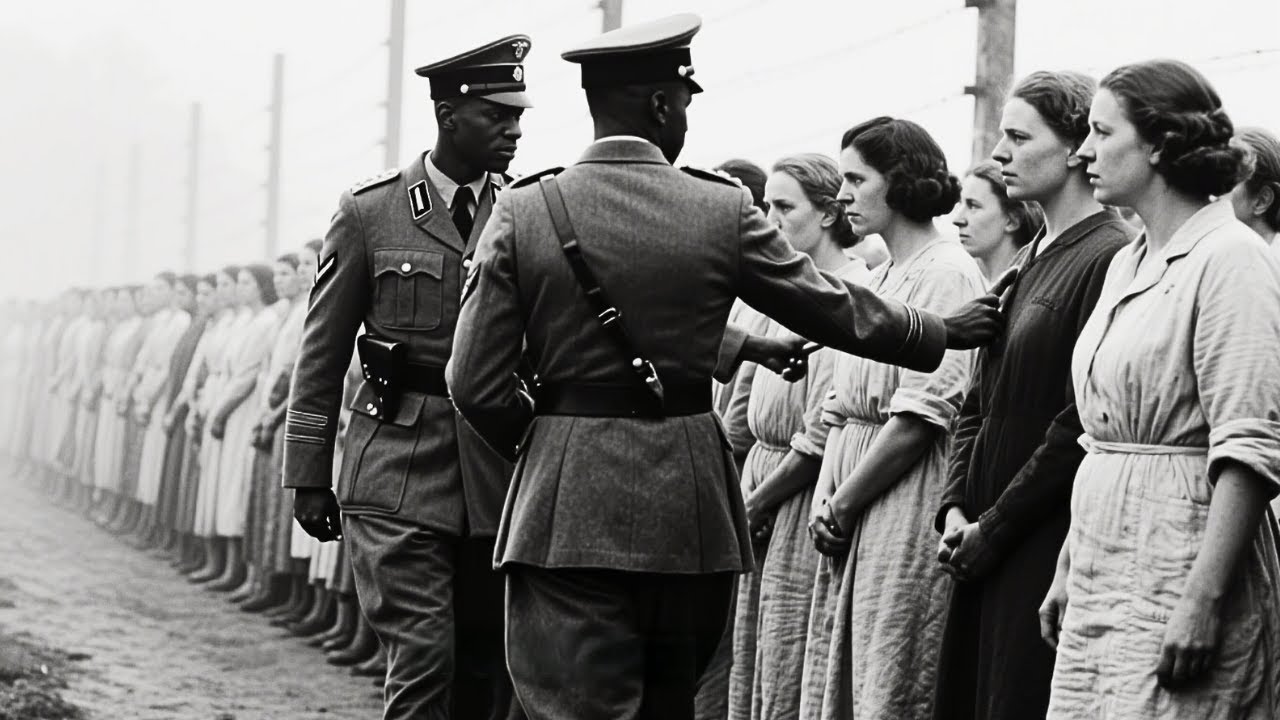
The journey itself was disorienting. After weeks at sea, the women arrived in unfamiliar landscapes marked by heat, humidity, and geography unlike anything they had known in Europe. Louisiana, with its wetlands and pine forests, felt foreign in both climate and atmosphere. But the greatest shock did not come from the land. It came from the people assigned to guard them.
Nazi propaganda had systematically dehumanized Black people, portraying them as dangerous, inferior, and violent. These messages were not incidental; they were central to the regime’s racial ideology and reinforced through films, newspapers, and official instruction. For many Germans, especially those with limited direct contact with non-Europeans, such portrayals formed their entire understanding of race.
As a result, the first sight of Black American soldiers standing in uniform challenged deeply embedded beliefs. The soldiers were disciplined, professional, and composed. They carried themselves with the authority of men performing official duties, not the distorted images presented by propaganda. For the women observing them, the contradiction was immediate and unsettling.
Historians and social psychologists describe this kind of experience as “cognitive dissonance,” a mental state that arises when deeply held beliefs are confronted by conflicting evidence. In such moments, individuals must either reject the new information or reevaluate their prior assumptions. In controlled environments like POW camps, where repeated interactions occurred daily, denial became increasingly difficult.
Accounts from similar camps suggest that early fear gradually gave way to confusion, then cautious observation. The guards enforced rules but did not display cruelty. Basic needs were met. Medical care was provided. Food rations, while modest by American standards, exceeded what many prisoners had experienced in Germany during the later years of the war. These realities contradicted expectations shaped by years of ideological conditioning.
The presence of Black officers further complicated those assumptions. Seeing Black men in positions of authority, issuing instructions and managing camp operations, challenged the hierarchical worldview that Nazi ideology had insisted was natural and immutable. For the prisoners, it became increasingly clear that the world they had been taught to understand did not align with the one unfolding around them.
From a sociological perspective, the camp functioned as an unintended educational space. While it was not designed to reform beliefs, daily exposure to alternative social structures inevitably influenced perception. The guards were not attempting to persuade or lecture. Instead, change occurred through routine interaction, consistency, and the absence of expected hostility.
This aligns with what researchers later termed the “contact hypothesis,” a theory suggesting that prejudice can be reduced through sustained, cooperative interaction between groups under conditions of equal status and shared norms. Although the POW setting was not one of equality, the professionalism and restraint of the guards undermined narratives of inherent superiority or inferiority.
For many of the women, the most profound realization was not simply that the propaganda had been false, but that they themselves had accepted it without question. This recognition often produced feelings of shame, grief, and moral reckoning. Some later reflected that the collapse of these beliefs was more destabilizing than captivity itself.
The Black soldiers, meanwhile, occupied a complex position. Serving in a segregated military, they were tasked with guarding individuals from a regime that had openly embraced racial hatred. Yet their conduct was shaped by military discipline, personal values, and an understanding that their behavior would be scrutinized both by prisoners and by their own country.
Oral histories from African American veterans suggest that many were acutely aware of this dynamic. For some, professionalism became a form of resistance, a way to assert dignity in a system that often denied it. Their restraint was not passive, but intentional.
Conversations between guards and prisoners, when they occurred, were often cautious and restrained. They rarely centered on ideology directly. Instead, they unfolded through questions, observations, and moments of quiet reflection. For the prisoners, these exchanges introduced the possibility that moral responsibility did not end with obedience or circumstance.
As weeks turned into months, the camp routine normalized. Fear diminished. Familiarity replaced shock. While the prisoners remained aware of their status, the environment no longer matched the terror they had anticipated. This normalization played a crucial role in reshaping perception, demonstrating that fear had been constructed rather than inevitable.
When repatriation eventually approached, many of the women faced a different kind of uncertainty. Returning to a devastated Germany meant confronting not only material destruction but moral reckoning. The experiences in the camp lingered, challenging simplified narratives of victimhood and innocence.
Postwar testimonies indicate that some former prisoners struggled to articulate what they had learned. Speaking openly about positive treatment by Black American soldiers was not always welcomed in postwar European societies still grappling with guilt, loss, and denial. Yet the internal transformation often persisted quietly.
In later years, educators and historians noted that such encounters played a subtle but meaningful role in postwar reconciliation. They did not erase responsibility for the crimes of the Nazi regime, nor did they absolve individuals of complicity. Instead, they revealed how ideology can collapse when confronted with lived reality.
The significance of these moments lies not in romanticizing captivity or minimizing suffering, but in understanding how human interaction can disrupt systems of dehumanization. Propaganda relies on distance and abstraction. Daily contact, by contrast, restores complexity.
The story of German women encountering Black American soldiers as guards is ultimately a story about perception and power. It illustrates how authority can be exercised with restraint, how prejudice can unravel without confrontation, and how individuals can be forced to reconsider beliefs they once accepted as truth.
In historical terms, these encounters were small and localized. Yet their impact was lasting for those involved. They demonstrate that even in the aftermath of immense violence, the possibility of moral clarity can emerge in unexpected places.
The lesson that endures is not about nations or uniforms, but about humanity. People are not defined by the narratives imposed upon them, but by how they act when given power over others. In those camps, under extraordinary circumstances, restraint and dignity became quiet forces of change.
History often records battles and treaties, but it is in these quieter interactions that deeper transformations occur. They remind us that ideology can teach hatred, but experience can unteach it.