THE FLASK THAT SPOKE AFTER TEN YEARS
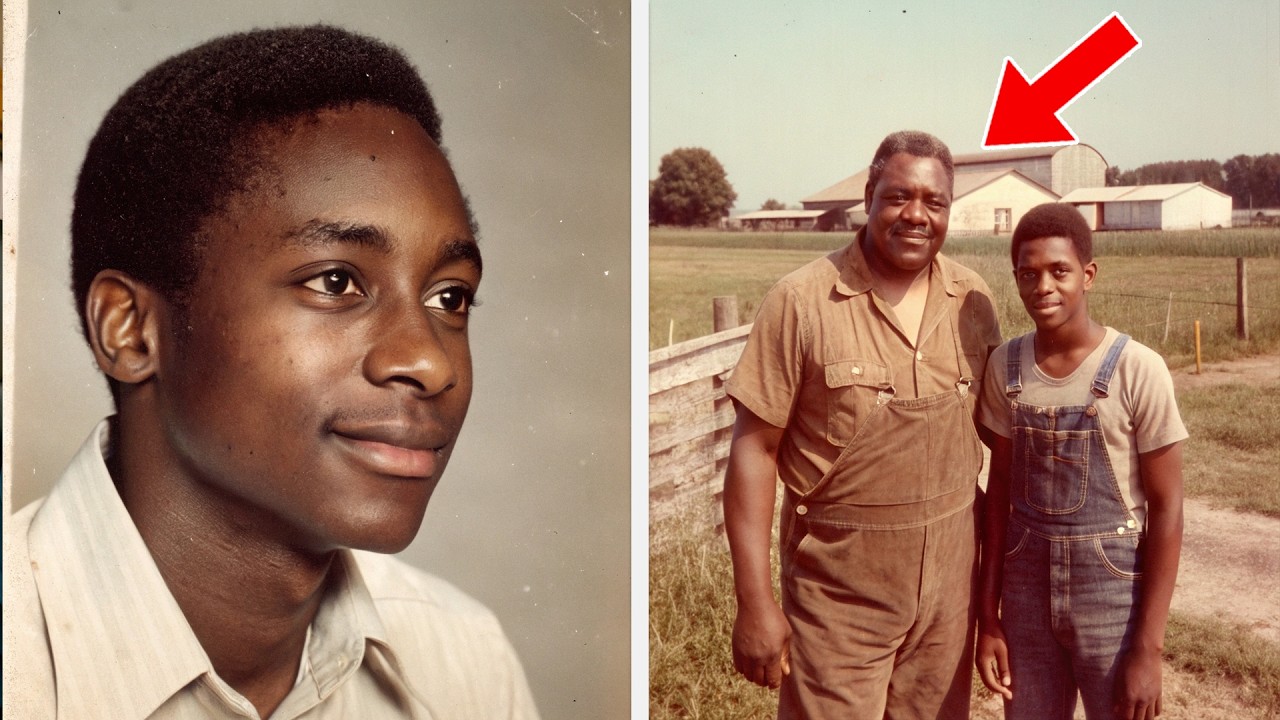
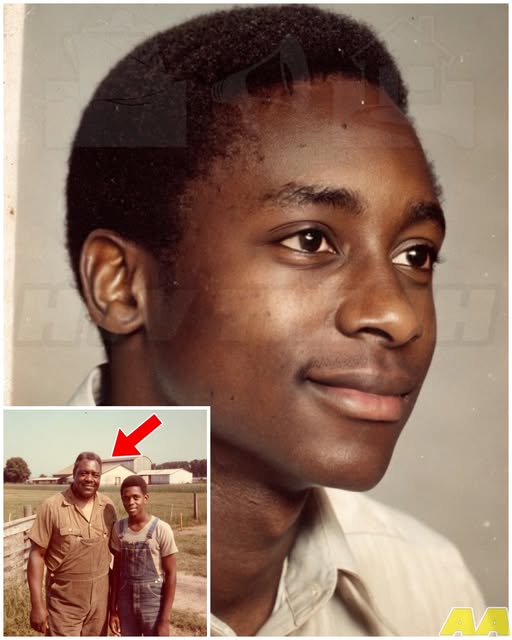
Isaiah Young left Chicago in the summer of 1980 with a backpack, a saxophone case, a journal, and a promise to his sister.
“Call me when you get there,” Althia told him, palms warm against his cheeks.
“I will,” he’d said. “I’m just clearing my head. I’m not disappearing.”
He meant it. Everyone who knew Isaiah said the same thing—
He kept his word.
Twenty years old, fluent in three languages, gifted with music, disciplined, and gentle to a fault, Isaiah wasn’t the type to vanish on purpose.
But he was the type to be crushed by a year of unexpected rejections, each one chipping away at the future he had envisioned.
So he hitchhiked across the South, staying at small farms and odd jobs along the way.
He told his family he was headed for Mississippi, where Althia lived.
He called home often.
Until he didn’t.
The final verified call came from Lincoln County, Arkansas—
from the dairy farm of a man named Leonard Jones.
Isaiah said he’d found a few days of work and would leave in the morning.
He never arrived.
And for ten years, no one knew why.
THE DISAPPEARANCE
When Isaiah stopped answering calls, the Young family began their own search:
friends, strangers, bus stations, police stations, hospitals.
Nothing.
A month later, Althia filed an official missing-person report.
Investigators retraced Isaiah’s route through rural Arkansas—those long two-lane stretches where strangers came and went without anyone noticing.
But no one remembered him except the people on that farm.
Leonard Jones and his son Maurice told officers:
Isaiah left voluntarily.
He walked off calmly one morning.
He left his belongings behind intentionally.
Police searched the property.
They found Isaiah’s backpack, journal, and saxophone case, neatly arranged in a small outbuilding.
No sign of struggle.
No blood.
No torn clothing.
And notably—
no flask, the small tin gift from Althia that he kept on him at all times.
Investigators dismissed its absence as irrelevant.
With no body, no witnesses, and no evidence of crime, the case went cold.
Isaiah became another name in a filing cabinet.
Until a decade later—
when one forgotten object resurfaced at a flea-market-style military exhibition in Little Rock, Arkansas.
THE BOX
October 1990.
The exhibition was loud and crowded, vendors calling over one another, selling rusted tools, bayonets, medals, and farm scrap.
A collector—meticulous and patient—liked buying unsorted boxes.
Old metal. Old hinges. Old stories buried inside.
He chose a dented cardboard box from a man who said it came from “an old farm clearing out junk.”
The collector carried it home, opened it at his workbench, and sorted through the debris.
Nails.
Rusty hinges.
Bent piping.
A few worthless canisters.
Then—
a flask.
Tin.
Worn.
Oxidized.
And marked by a distinct, deep dent at the bottom.
The collector cleaned it gently and recognized something strange about the dent’s shape.
He’d seen a detailed description of one like it months before, buried in a digitized newspaper archive.
He searched the archives again and found it:
A missing-person article describing Isaiah Young’s beloved flask—
dent sustained during a hiking fall in Europe.
A dent only his sister could identify.
And there it was, sitting on his workbench.
The collector’s skin prickled.
The box he had purchased came from a farm in Lincoln County.
The same farm where Isaiah was last seen.
He contacted law enforcement.
And the ten-year silence shattered.
THE REOPENING
Detective Quentin Bell, cold case division, was handed the file.
One object—just one—had undone an entire decade of assumptions.
Bell started with simple questions:
1. Why was the flask not with Isaiah’s other belongings in 1980?
2. How did it stay on that property for ten years?
3. Who kept it?
4. And why?
He traced the seller:
Maurice Jones.
Still living on his father’s old farm.
Still selling scrap for money.
Bell reviewed archives and found whispers that, in 1980, the Jones farm was suspected of unlicensed alcohol production. Equipment hidden on remote parts of the property. Never proven. Never forgotten.
When Bell inspected the farm, much had decayed—but the layout matched the old case diagrams.
And then he saw it:
A tall, boarded, weathered structure.
A silo-like tower.
Not touched for years.
Just far enough out of view.
Just concealed enough to hide something—
or someone.
Bell requested a new search warrant.
What they found changed everything.
THE CONFESSION
Maurice was brought in for questioning.
He tried, at first, to repeat the story he’d told ten years earlier.
Isaiah left.
He walked away.
He didn’t take his things.
But Bell laid out the evidence:
A photo of the flask.
The newspaper description.
The seller’s confirmation.
The newly exposed boarded tower.
Piece by piece, the detective dismantled the lie.
Maurice’s composure cracked.
Then it shattered.
And finally, after a decade, the truth surfaced like a body rising from deep water.
Isaiah never walked away.
He stumbled upon Leonard’s hidden alcohol-distillation equipment inside the boarded tower.
Leonard caught him looking, panicked, and struck him with a heavy metal tool.
Maurice didn’t witness the blow, but he saw the aftermath—
Isaiah collapsed on the ground, not breathing.
Leonard ordered Maurice to help hide the body.
Threatened him.
Reminded him of his dependence.
Together, they wrapped Isaiah in tarpaulin, carried him to an unused cistern, and lowered him down.
Then they covered the opening with metal scrap and shoveled dirt over it until the spot looked undisturbed.
During the cleanup, Isaiah’s flask fell from his pocket.
Leonard told Maurice to destroy all personal items.
But Maurice didn’t.
He kept the flask, thinking the tin might someday be worth something.
He tossed it into a box.
And forgot about it.
That forgotten box betrayed everything.
THE RECOVERY
With Maurice’s confession, Bell obtained authorization to open the cistern.
Crews excavated the dirt and metal.
When they lifted the final sheet of rusted roofing tin, the smell of old soil escaped like a sigh.
Inside lay tarpaulin.
And inside the tarpaulin were the remains of Isaiah Young, exactly where he had been hidden for ten years.
The medical examiner confirmed trauma consistent with Maurice’s account.
Isaiah’s backpack, journal, and saxophone were returned to his grieving family at last—
objects they had imagined him carrying into his future.
Instead, they had waited for him in the dark all that time.
JUSTICE
Leonard Jones was long dead— beyond the reach of earthly prosecution.
But Maurice Jones was not.
Under Arkansas law, concealment of a homicide is a continuing offense.
Because Maurice upheld the deception until 1990, the clock on the statute of limitations had not started until that moment.
He was charged with:
Concealment of a violent crime
Suppression of evidence
Obstruction of investigation
Providing false statements to law enforcement
During the trial, Maurice’s defense argued coercion.
That Leonard was domineering.
That Maurice was young.
That he feared his father.
But Maurice had ten years to tell the truth.
Ten years to give the Young family closure.
Ten years to correct the lies.
He did none of it.
The judge acknowledged Maurice’s eventual cooperation, but called his decade-long silence “a profound moral injury to the victim’s family.”
Maurice Jones was sentenced to 22 years in state prison.
PART VIII — THE BURIAL
Isaiah’s remains were released to his family.
His sister Althia held the dented flask— the same object she had given her brother for his 20th birthday, the same object he had carried across Europe, the same object that refused to stay buried with the lies.
“It was small,” she said,
“but it was his. And it spoke when he couldn’t.”
Isaiah Young was laid to rest surrounded by family, music, and the love he had never abandoned, even when the world abandoned him.
His saxophone stood on a velvet cloth beside the casket.
A final tribute to the young man who once believed he was destined for international stages.
Years later, prosecutors and investigators referenced the case often.
A single overlooked detail— a dented tin flask— had exposed a decade of deception.
It proved something vital: Cold cases aren’t always cold. Sometimes they’re just waiting for the one object that refuses to remain silent.
And the flask, dented and worn, had carried Isaiah’s story back into the light.